I recorded a podcast with my friend Kris. We’ve been having regular calls for about two years, together with a third friend Alex, like a mini mastermind. But this time we hit record.
The reason is simple. We both use AI agents every day for real work. Not demos. Not experiments. Production systems for actual clients. And we realized that almost nobody is sharing what that actually looks like.
Most content about AI agents is surface level. “I connected it to my calendar.” “It summarizes my emails.” That’s fine, but it’s not what happens when you deploy agents inside businesses that do millions in revenue.
So we just talked. No script, no prep. Here’s what came out of it.
Who is Kris
Kristijan Arapov is a growth marketer based in Hanover, Germany. He manages paid acquisition for D2C and consumer SaaS brands. Meta ads primarily, but also Google, TikTok, and newer platforms like Axon. Almost 10 years in the industry.
He’s also a nerd. Which is why we get along.
Kris initially dismissed OpenClaw as hype. Installed it, played with it, thought “this is fine but doesn’t replace my current systems.” Then he saw what I was building and reinstalled it. His words: “I was able to finish six months of work in 24 hours.”
It’s not prompt engineering. It’s access engineering.
This is probably the most important idea from the entire conversation.
Everyone talks about prompt engineering. How to write better instructions. How to structure your context. And yes, that matters. But the real unlock is something different.
It’s about what tools and data you give your agent access to.
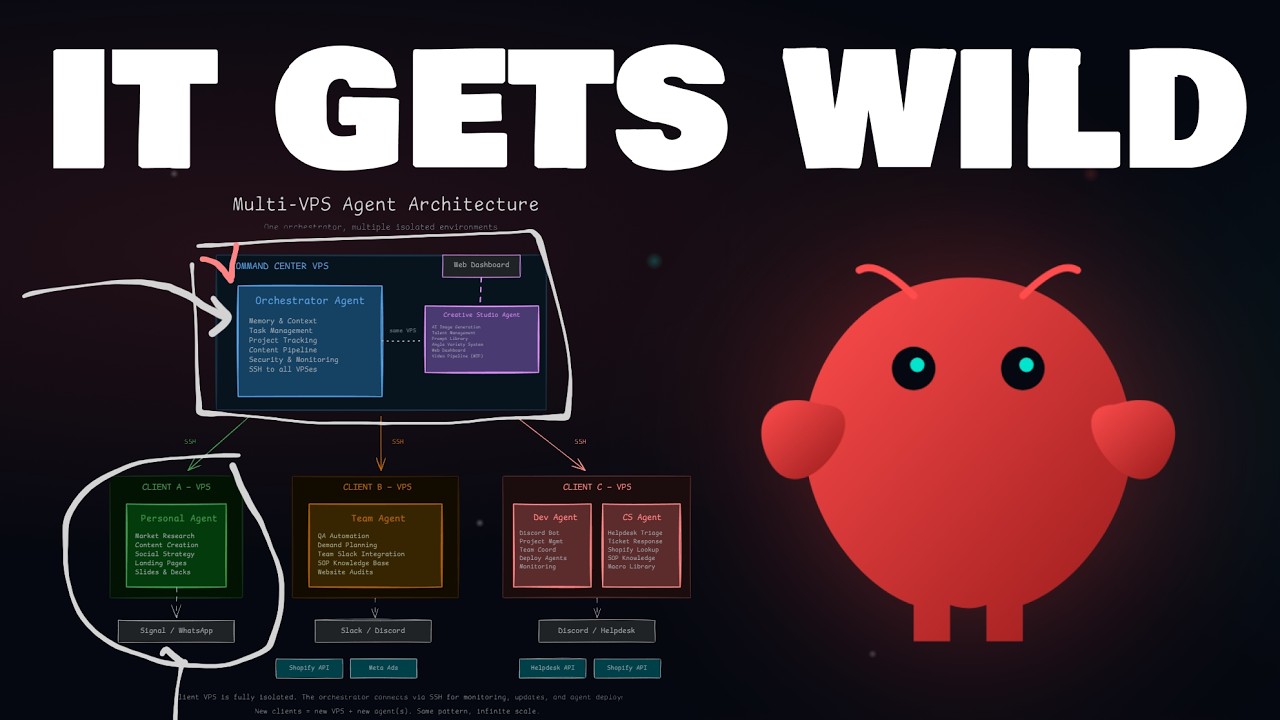
I’m building a customer service agent right now. It’s connected to Shopify (every order, every product, every discount code), the ERP (logistics partner, warehouse status), Gorgias (the ticket system), Slack (team conversations and escalations), and Stripe (payment processing).
When a ticket comes in, the agent doesn’t just reply with a template. It checks Shopify for the order. Checks the ERP for shipping status. Checks Stripe if there’s a payment issue. Reads Slack to see if the team already discussed it. Then it pieces together what happened and what to do about it.
That’s not prompt engineering. That’s access engineering. You’re not teaching the agent what to do. You’re giving it the right tools and letting it figure it out.
Kris had the same experience with his clients. He connected Meta API, Revenue Cat, Stripe, and Google Ads data to his agent. The result was a client report so comprehensive that the client said it would have cost them $5,000 to get something like that from an agency. Kris built it in 30 minutes.
Kris’s 5 day sprint
Kris documented everything he accomplished in his first 5 days of seriously using his agent (which he named “Boss Mode”). The numbers are hard to believe, but I watched it happen in real time over WhatsApp.
Day 1: Infrastructure. VPS setup, security hardening with Tailscale, the boring but necessary foundation work. He took an interesting approach. He found YouTube videos from security experts he trusts, gave the transcripts to his agent, then had three different AIs (Gemini, Claude, GPT) review the security plan. Fed all the feedback back to Boss Mode, then said “implement everything.”
Day 2: Digital presence. Migrated his entire website from Framer ($240/year) to self-hosted Astro on Cloudflare (free). The agent handled SEO implementation, automated his Kit newsletter to auto-publish on the website with proper images. He also audited all his SaaS tools and cancelled about $100/month worth of subscriptions that the agent could replace.
Day 3: Content automation. This is where it gets interesting. Kris has years of client calls, case studies, and data. He had Boss Mode analyze a case study where he took a client from zero to $210K MRR in 8 months. The agent suggested turning it into a 5-day email course, set up the whole thing in Kit, and created LinkedIn content to funnel people into it. 30 minutes.
The key thing Kris pointed out: because the agent had access to his previous emails, it learned his tone of voice automatically. No teaching needed. It just read what he’d written before and matched it.
Day 4: Client reporting. This is the $5K report story. By connecting Meta API, Revenue Cat, Stripe, Google Ads, plus his internal briefs and call transcripts, the agent built a creative performance dashboard that showed month-over-month trends, creative rankings, hypothesis tracking, and actionable recommendations. All written from Kris’s perspective and expertise.
Day 5: Creative production. Kris connected Replicate API and his Figma creative templates to build an ad generation system. Last night alone, he created more than 60 static ad creatives for $14. The agent remembered which templates Kris liked and which he didn’t, and started producing more of what worked.
Never build an agent without a backup
This came up naturally in the conversation and I think it’s one of the most practical pieces of advice.
I don’t know how to fix an agent when it breaks. Not really. I’m not a developer. So my rule is simple: always have another agent that can fix the first one.
When I set up OpenClaw the first time, I used Claude Code (running locally on my computer) to do the setup. Claude Code is more predictable, more linear. So when my OpenClaw agent has problems, Claude Code can SSH in and fix things.
When I set up my wife’s agent (Francesca), I did it from my agent (John). John set up the VPS, hardened security, installed everything, documented the whole process. So when Francesca has issues, John can fix her.
Same with client agents. The agent that creates a client system is always the one that can repair it.
Kris does the same thing. He uses Claude Code locally as his backup for Boss Mode on the VPS. They stay in sync by having Lovable export comprehensive summaries that get fed to Claude Code.
The principle: every agent needs a parent that understands its setup.
The content machine problem (and how agents solve it)
We both have the same problem. We work all day with interesting systems, have fascinating conversations with clients and friends, and then never find time to create content about any of it.
My solution (still being built) works like this. My entire workday happens through my agent. Every conversation, every decision, every task. The agent sees all of it. Every day, a workflow triggers that reviews what happened and extracts teachable ideas. Those go into a Trello board. I review them, leave voice feedback using speech to text, and the agent refines the ideas into drafts, creates visuals, and eventually posts.
The key insight: the content comes from the work. I don’t need to sit down and think of what to write about. The agent surfaces what’s interesting from what I’m already doing. I just review and approve.
Kris is building something similar. He has years of calls and case studies that contain golden nuggets he’s never had time to extract. Boss Mode is working through that backlog.
The trust ladder
We talked about this in the context of client deployments, but it applies everywhere.
You don’t start by giving an agent full write access to everything. You start with read-only. The agent observes, learns patterns, understands the business. You ask it questions. It gives you answers based on what it can see.
Then you let it suggest actions. “I think we should do X.” You decide yes or no.
Then eventually, you give it write access. And when that happens, problems get solved before you even know they exist. I told the story of a Slack message about a broken discount code. Today, my agent reads Slack, investigates the issue across Shopify and the custom app, and tells me what happened and what to fix. Tomorrow, when it has write access, it just fixes it and tells me after.
But you earn that trust step by step. Especially when you’re working inside eight and nine figure companies where every mistake is expensive.
What doesn’t change
The biggest misconception about AI agents is that they replace thinking. They don’t.
Kris put it well when talking about his client report. Yes, the AI built it in 30 minutes. But the reason it was worth $5,000 is that Kris told it where to look, what to compare, what metrics matter, and how to frame the findings. That’s 10 years of marketing experience guiding the agent.
It’s like the old story about the mechanic who charges $500 for one hit with a hammer. You’re not paying for the hit. You’re paying for the years it took to know where to hit.
The agents multiply output. They don’t replace judgment. The value we add as humans, our own knowledge, our pattern recognition, our ability to say “this matters and this doesn’t,” that’s still the job. It just happens a lot faster now.
Where to find Kris
- Website: arapk.com
- LinkedIn: Kristijan Arapov
- We also have a third friend in our mastermind, Alex, whose link is in the YouTube description.
If you’re a marketer or consultant wondering whether AI agents are worth the investment of time and money, watch the full episode. It’s not polished. It’s two people who use this stuff every day talking about what actually works.