This page is here to give you an idea of what can be built inside a company. These are real systems and skills, but they are not fixed products or a menu. Every company has a different team, stack, knowledge, and bottleneck.
Nothing under that combination.
examples of complete systems
Different starting points, built around the company
Some companies need one shared brain that grows with the team. Others need a system around one important workflow. These examples show the range. They all connect to the company's existing tools and keep people in the decisions that need them.
Ecommerce group · 40 to 50 peopleLive
A shared company brain
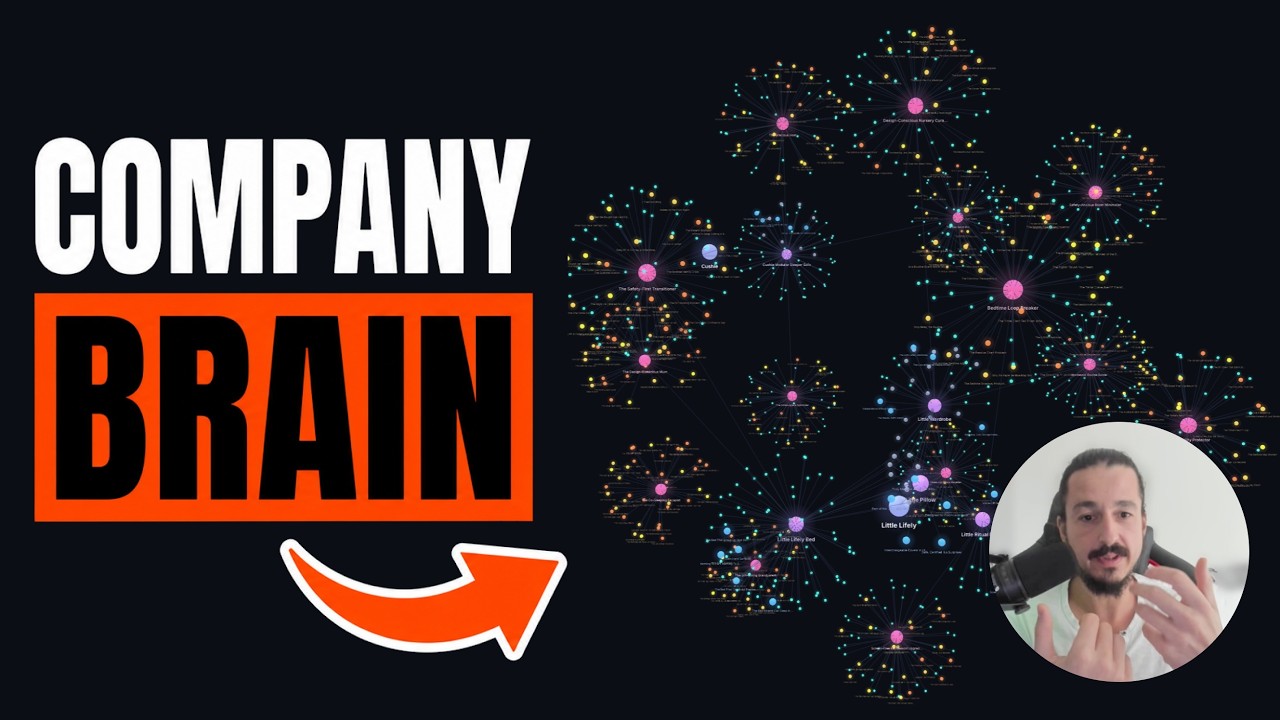
One AI system the whole team can reach from Slack and Discord. It holds the company's knowledge, connects to around 55 of its tools, and helps with research, reporting, marketing, operations, and other work that would otherwise stay scattered across people and software.
The company owns what it learns. When the team works out how to do something well, that process becomes a reusable skill. The next person can use it without starting again. Permissions are defined per person and per tool, so the system begins with limited access and earns more trust through use.
The useful asset is not one model or one chat history. It is the company workspace: the knowledge, tools, permissions, and skills the team builds over time. People can leave and models can change without taking that operating knowledge with them.
The whole architecture on video, screens included, and the written version of it.
Consumer brands · DACH and AustraliaLive
A customer support system that prepares the work
It works inside the helpdesk the team already uses. When a ticket arrives, the system checks the company's procedures, looks up the order, stock, and shipping state, then prepares the reply as a draft. A person reviews it before anything reaches the customer.
It also looks ahead. The same system watches orders that are running late so the team can contact customers before they need to chase.
GorgiasShopifyERPcompany SOPshuman approval
Why it was built this way
The system does the looking up, checking, and first draft. The support team keeps the relationship, the judgment, and the final word. The architecture proved itself at one brand, then was adapted for a second company with different tools, procedures, and tone.
Home goods brand · preorder model · 10 marketsLive
A purchase-order allocation system
For a brand selling on preorder, the difficult question is which customer order is actually covered by which incoming shipment. This system mirrors orders and purchase orders every four hours, allocates each order line to real stock or incoming supply across ten markets, and gives the team one place to see the answer.
It refuses to invent certainty. If the source systems contradict each other, it stops instead of making an allocation it cannot defend. It can prepare customer communication, but it never sends it.
Cin7ShopifyPostgresinternal cockpit3PL export
What the team sees
The internal cockpit brings together orders, supply, purchasing, product availability, analytics, logs, and system health. Operations can answer "when does this customer actually get their order" without opening four systems and a spreadsheet. The system provides the truth layer. People still decide and act.
Ecommerce group · international hiringIn pilot
A hiring operating system
An application pipeline that carries a candidate from applying to the human interview. It analyses the application, coordinates personality and skill assessments, and runs an AI pre-interview before the team spends time in a call. The hiring manager receives a clearer, better-prepared candidate file.
Honest status. The whole path has been proven end to end on a controlled pilot, and expansion is deliberately paused until a privacy fix and a rollback-backed release are in place. It is not yet running at full volume.
Bounded phone workflow · inside the hiring systemIn pilot
A voice agent for a bounded interview
A spoken pre-interview that runs in the browser in real time. Speech recognition, a low-latency interviewer model, and a natural voice work together fast enough for the candidate to have a real conversation instead of filling in another form.
Deliberately bounded. It handles one clearly defined workflow, on an allowlist, and it cannot move a candidate on its own. Voice is the interface, the judgment stays human.
WebRTCrealtime speech to textlow-latency modelvoice synthesis
The sectors, scale, and system status are real. Company names and identifying details are left out on purpose.
examples of reusable skills
Smaller capabilities a company brain can learn
A company brain does not arrive knowing your business. It becomes useful by combining the company's knowledge with clear skills for repeated work. These are examples already built into the company brain above. A new company would choose and adapt the ones that matter to its own work.
Market and customer research
Collect reviews, support tickets, community discussions, competitor material, and search demand, then turn them into usable customer evidence, personas, pains, objections, USPs, angles, and mechanisms. The output becomes shared knowledge that other people and skills can use.
voice of customerpersonascompetitor analysismarket angles
Brand strategy from customer evidence
Turn completed market research into a practical brand strategy: audience, positioning, promise, messages, story, tone, and guardrails. The agent does the synthesis, asks the human only for the decisions it cannot make from evidence, and saves the result where the whole team can use it.
Use the brand's research to generate and test new advertising angles, then turn strong hooks into natural UGC scripts. The creative stays grounded in the same customer evidence instead of depending on a fresh prompt every time.
angles and hooksUGC scriptscreative testing
Static ad production
Turn approved research, angles, and product imagery into ready-to-test static ads for Meta in feed and story formats. The workflow keeps brand context, copy, visual direction, and production variants connected.
Meta ads1:1 and 9:16image generationcreative variants
Advertorials and listicles
Take a product, customer segment, or existing ad and build the matching advertorial or listicle from research through to a reviewable page. The workflow keeps the hook, awareness level, evidence, copy, images, and final publishing handoff connected.
Bring Meta Ads, Google Ads, Shopify, margin, inventory, and creative context into one place so the media buyer or founder can ask what is happening and what to do next. The skill is designed as a thinking partner for decisions, not a dashboard that stops at reporting numbers.
Meta and Google Adsbudget allocationunit economicsinventory-aware scaling
CRO and A/B testing
Turn a commercial problem into a proper experiment: choose the surface, audience, metric, delivery method, and decision rule, then read the result honestly before deciding what to do next.
test strategyconversion ratemeasurementresult readout
Country expansion testing
Prepare a new market in Shopify, adapt an existing page and offer where needed, reuse proven ads for the local test, and leave the market and campaigns in a controlled state until the team approves launch.
Take a product idea through market, competitor, and customer research, pressure-test the opportunity, identify supplier feasibility questions, and turn the result into a structured brief a buyer or supplier can actually use.
Help a product team move from discovery through requirements, suppliers, quality, pricing, forecasting, launch, and post-launch learning without losing the decisions and evidence connecting each stage.
product discoverysupplier coordinationquality and compliancelaunch planning
Supplier sampling and production artwork
Prepare the practical files and checks around product samples, print tests, packaging, fabric artwork, labels, and pre-production approval. It sits inside the product workflow, so the agent understands the product decision around the file rather than treating it as an isolated design task.
Create product-accurate mockup variations from real reference images, or generate and revise a 3D model for product exploration and browser review. The workflows preserve the exact product, configuration, colour, and revision history.
product mockupslifestyle imagesimage to 3Dbrowser review
Revenue anomaly detection
Monitor revenue by product and market, compare it with the expected baseline, and investigate the likely causes only when something moves outside the normal range. Ads, traffic, pages, inventory, and fulfilment become evidence for the diagnosis.
Run recurring checks across priority ecommerce pages and trigger a deeper checkout review after important website changes. The system looks for broken journeys and conversion risks before the team discovers them through falling sales.
Find commercial search opportunities from real data, monitor meaningful competitor changes, and study the content that is breaking out across social platforms. The output is a focused opportunity or action for the team, not a folder of automated reports.
These are examples, not the limit. New skills are built from the company's own repeated work, then improved as the team uses them.
an example in progress
What I am building now
Consumer brand · marketingBuilding now
A marketing brain shared by every system
Marketing knowledge tends to end up scattered across research files, decks, campaign reports, support tickets, and people's heads. Then every new campaign begins by rediscovering what the company already knew.
This system creates one evidence layer for the company. It keeps raw customer evidence by product, builds usable knowledge on top of it, and links every claim back to its source so other agents and people can use it without losing where the answer came from.
Where it is now. The surrounding media-buying system is already live and adjusting ad budgets automatically. The shared knowledge layer is being built on one product line first, then it will expand once the architecture has proved itself.
evidence layerprovenanceagent-independent
What would be useful inside your company?
You do not need to choose one of these examples. If something on this page made you think of a bottleneck, a workflow, or knowledge your company keeps losing, tell me about that. We can start with a shared brain, one bounded system, or one useful skill and build from there.